The event
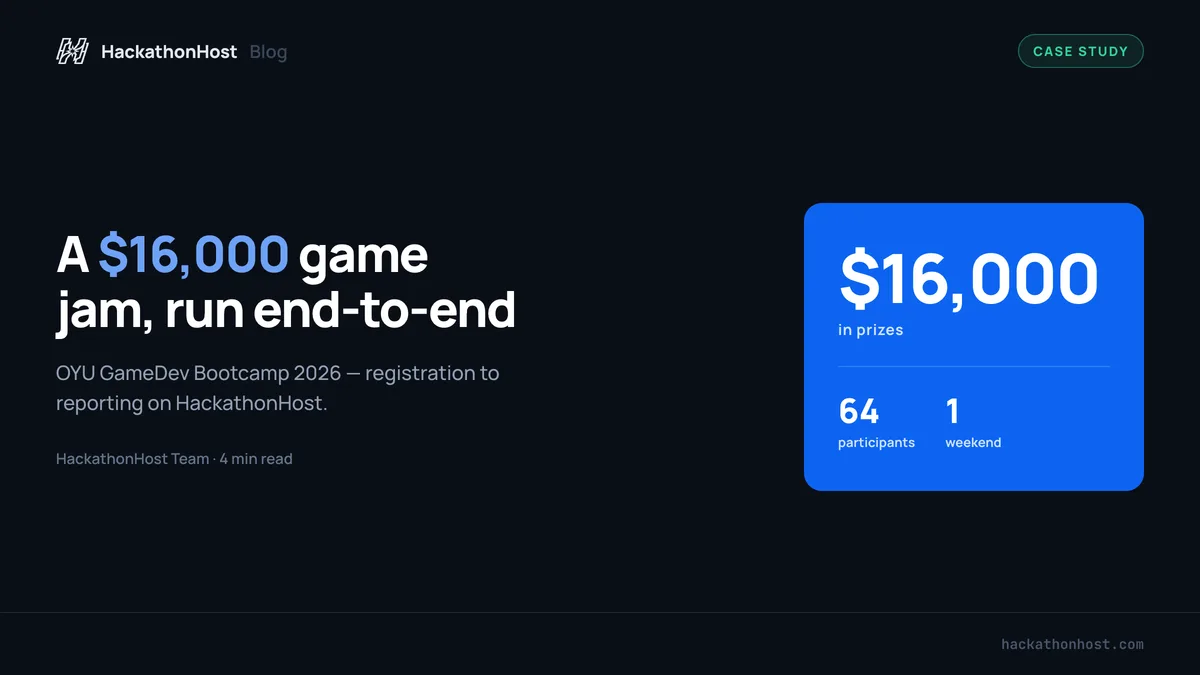
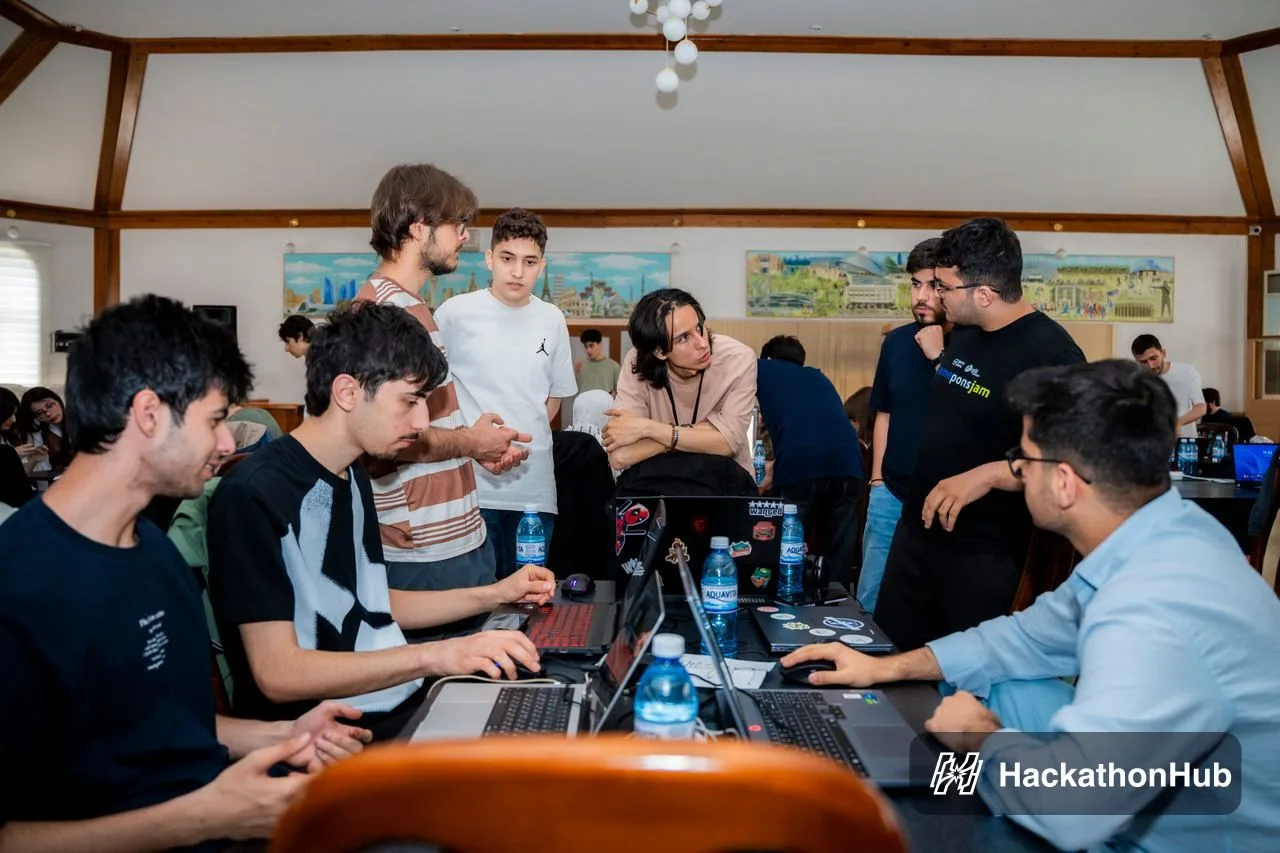
The OYU GameDev Bootcamp 2026 wrapped up with a high-stakes finale: a two-day game jam at Odlar Yurdu University in Baku, where 64 participants across 13 teams built original game prototypes from scratch, competing for a $16,000 (27,200 AZN) prize pool.
It's exactly the kind of event that looks effortless from the audience and is anything but behind the scenes — registration, teams, a theme, a jury, a strict demo-day schedule, and real prize money on the line. The organizers ran the whole thing on HackathonHost — from the first sign-up to the final report.
| Participants | 64 |
| Teams | 13 |
| Jury members | 3 |
| Prize pool | $16,000 (27,200 AZN) |
| Format | 2-day game jam |
| Venue | Odlar Yurdu University, Baku |
The challenge
Real money raises the stakes. With a 27,200 AZN prize split across five places, the result had to be demonstrably fair — defensible, weighted scoring that every team trusted. On top of that: a jury to coordinate, a packed demo day with strict per-team timing, mentors and participants who all needed up-to-date information, and a small organizing team that couldn't afford to spend the event buried in spreadsheets and printouts.
One platform, registration to reporting
Registration & teams
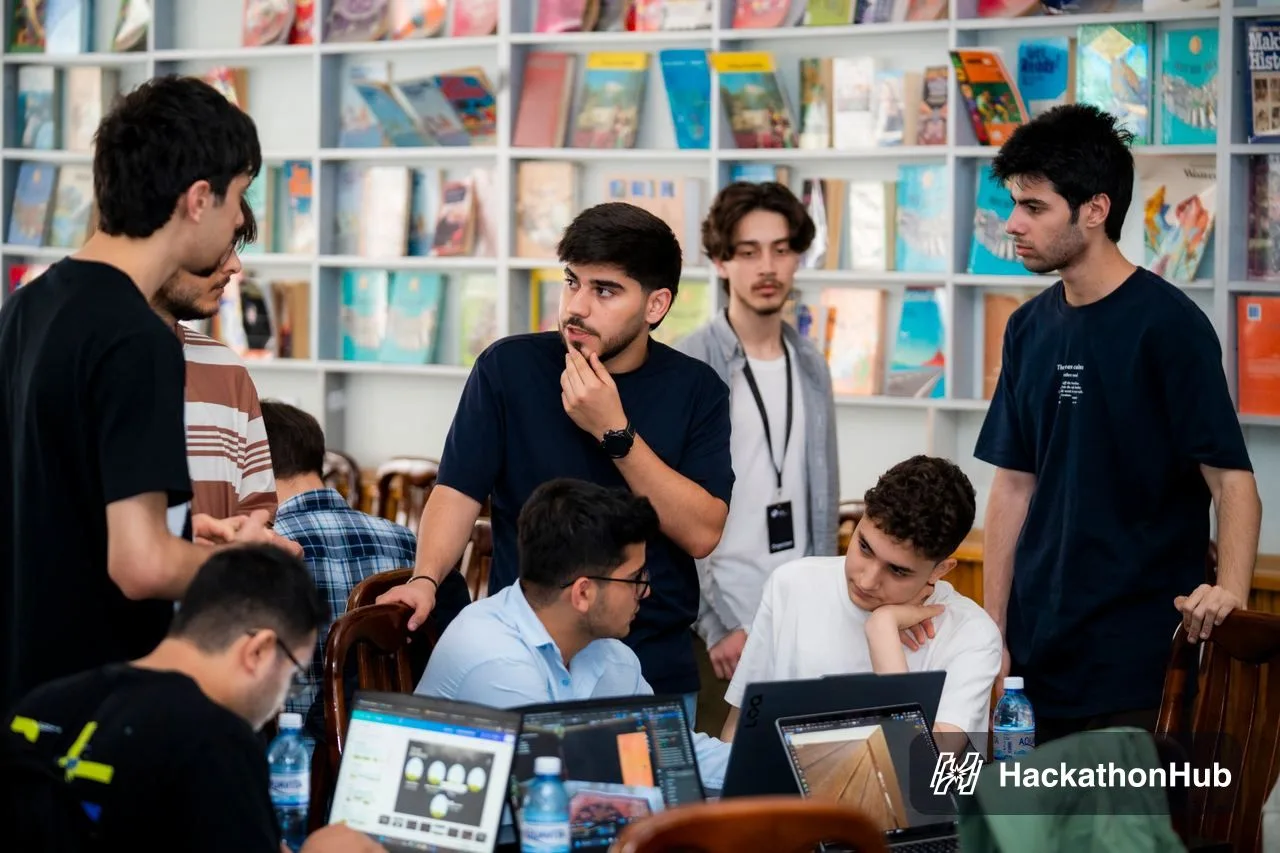
It started with a single public registration link. Teams signed up (3–6 members each, with a custom "Which university?" question), and HackathonHost turned approved registrations into teams automatically — no manual list-wrangling.
Theme, rules & criteria
The jam ran on three revealed themes — Urban, Connection, Escape — with a clear rule set (including an AI-use disclosure policy) and a weighted judging rubric defined up front: Game Quality 50%, Creativity & Theme Adherence 30%, Presentation & Pitch 20%, each broken into sub-criteria. Every participant knew exactly how they'd be scored before they wrote a line of code. We turned this rubric into a full guide: game jam judging criteria.
The build
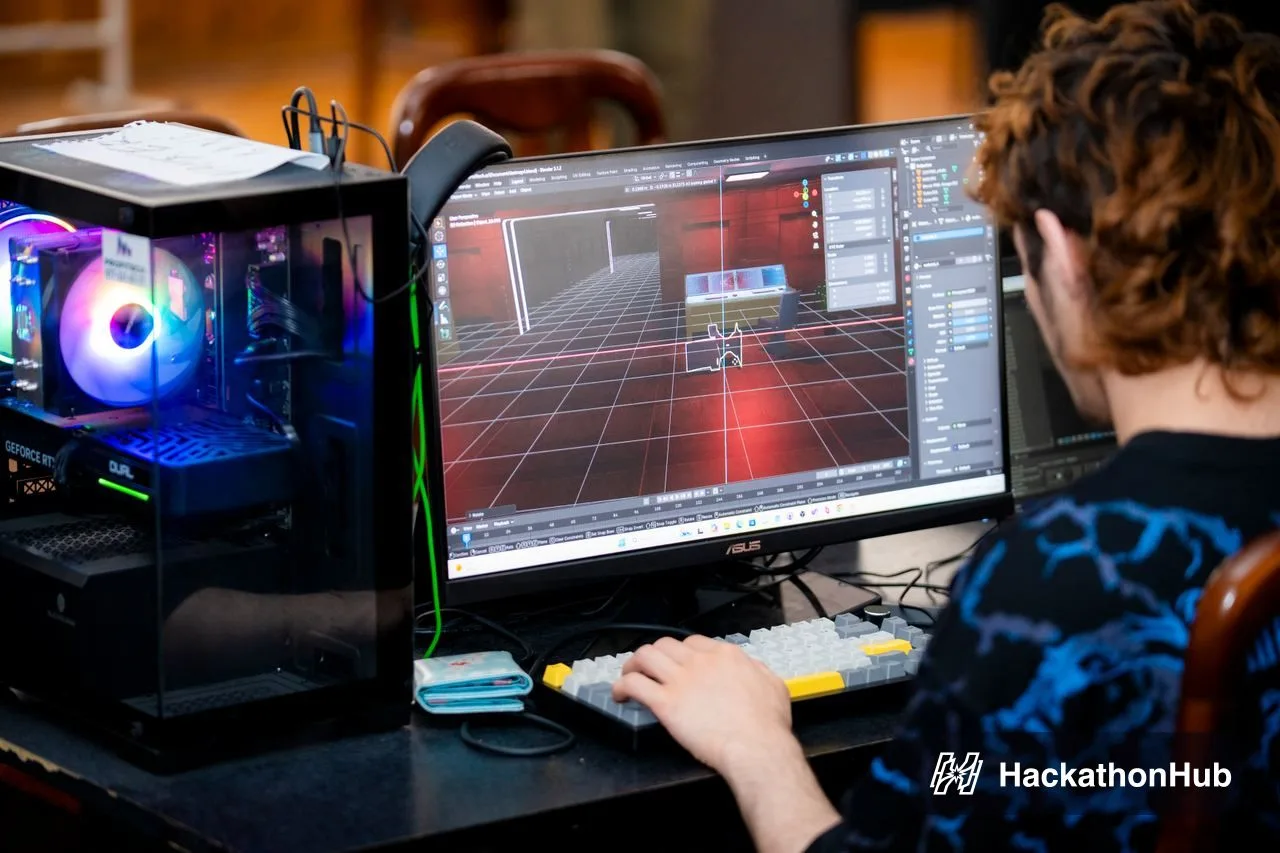
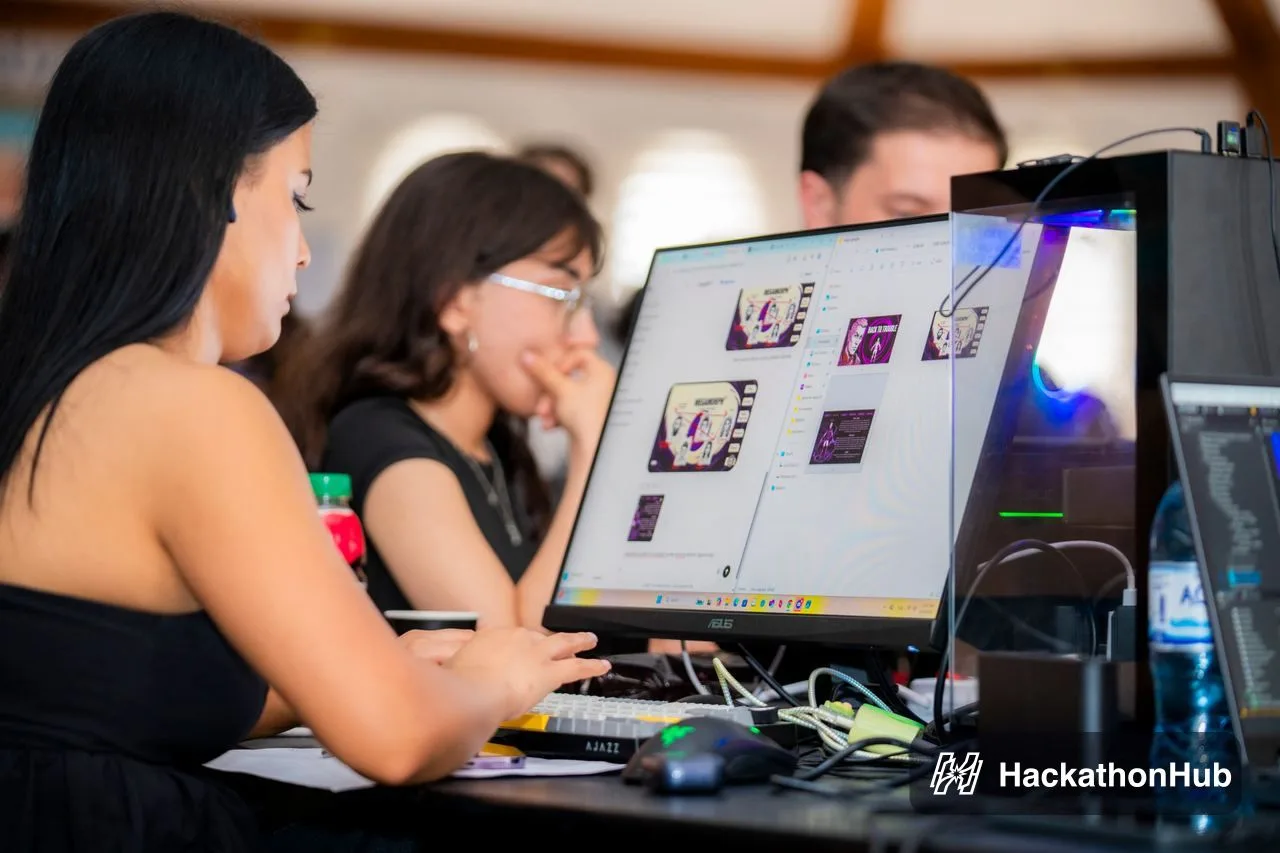
Over two days, 13 teams went from empty projects to playable prototypes — level design, art, audio, and mechanics.
Everyone on the same page
Throughout the jam, every participant had their own team dashboard with live, always-current information — the schedule, themes, rules, their submission status, and the mentor and jury feedback left for their team. Instead of organizers fielding the same questions over and over (or printing and re-printing handouts), everyone simply checked their dashboard. It kept 64 people aligned without a single mass email.
Demo day & real-time scoring
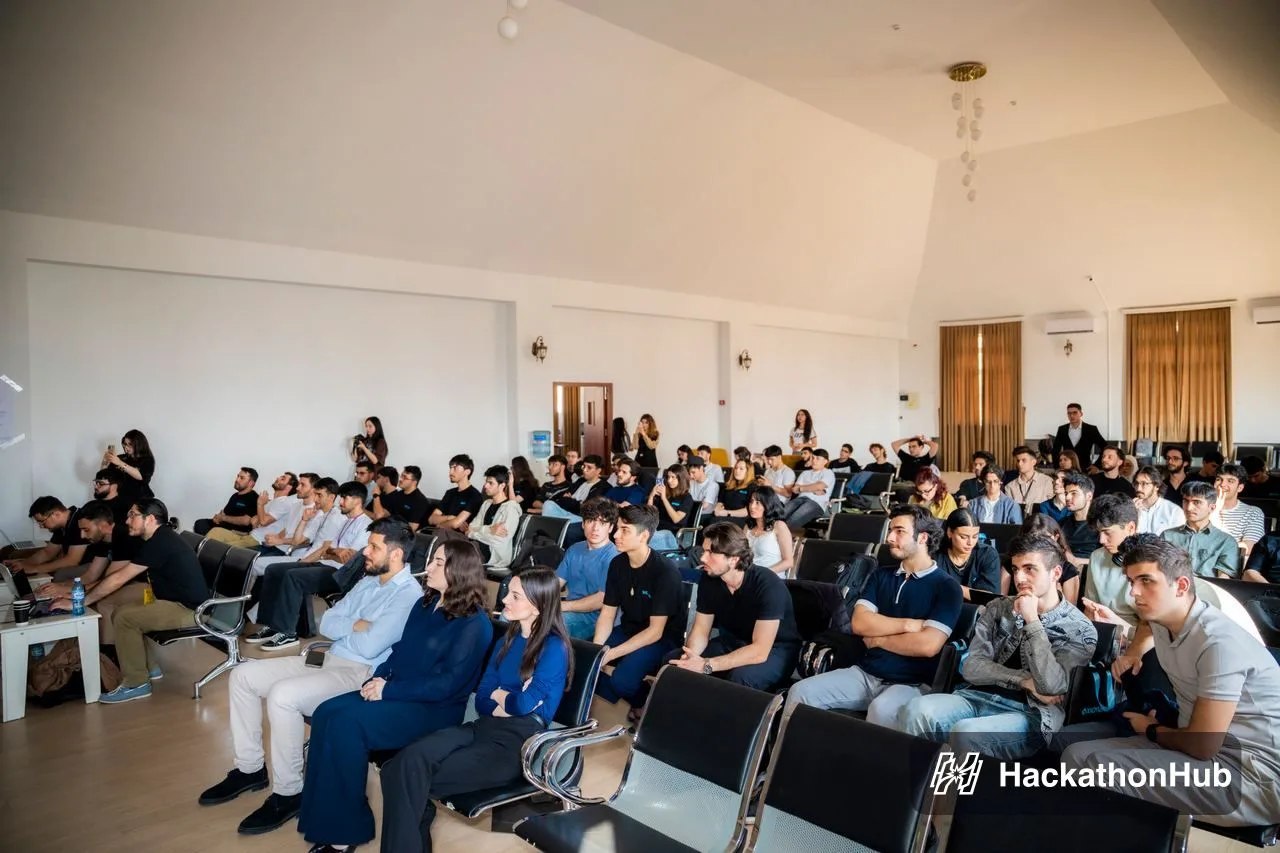
This is where HackathonHost earned its keep. On demo day, Live Control stepped the organizers through every team's presentation with a timer (5 minutes to present, 5 for Q&A), keeping a packed schedule on track. Meanwhile, the jury scored each team in real time against the weighted rubric, so the leaderboard was ready the moment the last team finished — no spreadsheets, no tallying.
Winners & certificates
The final ranking came straight out of the weighted scores — no late-night spreadsheet reconciliation — and the team handed out certificates on the spot.
The podium:
| Place | Team | Prize |
|---|---|---|
| 🥇 1st | X game Boys | 10,000 AZN |
| 🥈 2nd | Frame 13 | 7,000 AZN |
| 🥉 3rd | Team Neecro | 5,000 AZN |
| 4th | MegaMorph | 3,000 AZN |
| 5th | Dev ORA | 2,200 AZN |
Post-event reporting
After the awards, the organizers exported the full event — results, scores, and participant data — for their records, partners, and sponsors. One event, one platform, from the first registration to the final report.
The impact
Beyond running smoothly, HackathonHost replaced real work. By the organizers' own estimate, the platform did the job of two additional coordinators — over $1,000 in real cost — and removed tons of printing during and after the event (scoring sheets, feedback forms, schedules, attendance lists). The same two-day jam that would have needed a bigger crew and a stack of paper ran with a small team and a set of dashboards.
In the organizer's words
"Running a two-day game jam for 64 people across 13 teams used to mean a wall of spreadsheets and printouts. With HackathonHost, demo day actually ran on time — the timers kept presentations tight, the jury scored every team in real time, and every participant could see their schedule and their mentor and jury feedback on their own dashboard. It saved us two extra coordinators — over $1,000 — and a mountain of print work, during and after the event. The whole thing was faster and far less stressful to run."
— Ilgar Alirzayev, host, OYU GameDev Bootcamp 2026
Partners
OYU GameDev Bootcamp 2026 was powered by Xsolla, in partnership with the Innovation & Digital Development Agency, IGDA Azerbaijan, and Odlar Yurdu University.
Running a hackathon or game jam of your own? HackathonHost handles it end-to-end — see how it works and what it costs. New to organizing? Start with how to run a game jam and hackathon judging criteria.